sexta-feira, 5 de junho de 2020

WPSeku V0.4 - Wordpress Security Scanner


WPSeku is a black box WordPress vulnerability scanner that can be used to scan remote WordPress installations to find security issues.

Installation
$ git clone https://github.com/m4ll0k/WPSeku.git wpseku
$ cd wpseku
$ pip3 install -r requirements.txt
$ python3 wpseku.py

Usage

Generic Scan
python3 wpseku.py --url https://www.xxxxxxx.com --verbose

  • Output
----------------------------------------
_ _ _ ___ ___ ___| |_ _ _
| | | | . |_ -| -_| '_| | |
|_____| _|___|___|_,_|___|
|_| v0.4.0

WPSeku - Wordpress Security Scanner
by Momo Outaadi (m4ll0k)
----------------------------------------

[ + ] Target: https://www.xxxxxxx.com
[ + ] Starting: 02:38:51

[ + ] Server: Apache
[ + ] Uncommon header "X-Pingback" found, with contents: https://www.xxxxxxx.com/xmlrpc.php
[ i ] Checking Full Path Disclosure...
[ + ] Full Path Disclosure: /home/ehc/public_html/wp-includes/rss-functions.php
[ i ] Checking wp-config backup file...
[ + ] wp-config.php available at: https://www.xxxxxxx.com/wp-config.php
[ i ] Checking common files...
[ + ] robots.txt file was found at: https://www.xxxxxxx.com/robots.txt
[ + ] xmlrpc.php file was found at: https://www.xxxxxxx.com/xmlrpc.php
[ + ] readme.html file was found at: https://www.xxxxxxx.com/readme.html
[ i ] Checking directory listing...
[ + ] Dir "/wp-admin/css" listing enable at: https://www.xxxxxxx.com/wp-admin/css/
[ + ] Dir "/wp-admin/images" listing enable at: https://www.xxxxxxx.com/wp-admin/images/
[ + ] Dir "/wp-admin/includes" listing enable at: https://www.xxxxxxx.com/wp-admin/includes/
[ + ] Dir "/wp-admin/js" listing enable at: https://www.xxxxxxx.com/wp-admin/js/
......

Bruteforce Login
python3 wpseku.py --url https://www.xxxxxxx.com --brute --user test --wordlist wl.txt --verbose

  • Output
----------------------------------------
_ _ _ ___ ___ ___| |_ _ _
| | | | . |_ -| -_| '_| | |
|_____| _|___|___|_,_|___|
|_| v0.4.0

WPSeku - Wordpress Security Scanner
by Momo Outaadi (m4ll0k)
----------------------------------------

[ + ] Target: https://www.xxxxxxx.com
[ + ] Starting: 02:46:32

[ + ] Bruteforcing Login via XML-RPC...
[ i ] Setting user: test
[ + ] Valid Credentials:

-----------------------------
| Username | Passowrd |
-----------------------------
| test | kamperasqen13 |
-----------------------------

Scan plugin,theme and wordpress code
python3 wpseku.py --scan <dir/file> --verbose

Note: Testing Akismet Directory Plugin https://plugins.svn.wordpress.org/akismet
  • Output
----------------------------------------
_ _ _ ___ ___ ___| |_ _ _
| | | | . |_ -| -_| '_| | |
|_____| _|___|___|_,_|___|
|_| v0.4.0

WPSeku - Wordpress Security Scanner
by Momo Outaadi (m4ll0k)
----------------------------------------

[ + ] Checking PHP code...
[ + ] Scanning directory...
[ i ] Scanning trunk/class.akismet.php file
----------------------------------------------------------------------------------------------------------
| Line | Possibile Vuln. | String |
----------------------------------------------------------------------------------------------------------
| 597 | Cross-Site Scripting | [b"$_GET['action']", b"$_GET['action']"] |
| 601 | Cross-Site Scripting | [b"$_GET['for']", b"$_GET['for']"] |
| 140 | Cross-Site Scripting | [b"$_POST['akismet_comment_nonce']", b"$_POST['akismet_comment_nonce']"] |
| 144 | Cross-Site Scripting | [b"$_POST['_ajax_nonce-replyto-comment']"] |
| 586 | Cross-Site Scripting | [b"$_POST['status']", b"$_POST['status']"] |
| 588 | Cross-Site Scripting | [b"$_POST['spam']", b"$_POST['spam']"] |
| 590 | Cross-Site Scripting | [b"$_POST['unspam']", b"$_POST['unspam']"] |
| 592 | Cross-Site Scripting | [b"$_POST['comment_status']", b"$_POST['comment_status']"] |
| 599 | Cross-Site Scripting | [b"$_POST['action']", b"$_POST['action']"] |
| 214 | Cross-Site Scripting | [b"$_SERVER['HTTP_REFERER']", b"$_SERVER['HTTP_REFERER']"] |
| 403 | Cross-Site Scripting | [b"$_SERVER['REQUEST_TIME_FLOAT']", b"$_SERVER['REQUEST_TIME_FLOAT']"] |
| 861 | Cross-Site Scripting | [b"$_SERVER['REMOTE_ADDR']", b"$_SERVER['REMOTE_ADDR']"] |
| 930 | Cross-Site Scripting | [b"$_SERVER['HTTP_USER_AGENT']", b"$_SERVER['HTTP_USER_AGENT']"] |
| 934 | Cross-Site Scripting | [b"$_SERVER['HTTP_REFERER']", b"$_SERVER['HTTP_REFERER']"] |
| 1349 | Cross-Site Scripting | [b"$_SERVER['REMOTE_ADDR']"] |
----------------------------------------------------------------------------------------------------------
[ i ] Scanning trunk/wrapper.php file
[ + ] Not found vulnerabilities
[ i ] Scanning trunk/akismet.php file
-----------------------------------------------
| Line | Possibile Vuln. | String |
-----------------------------------------------
| 55 | Authorization Hole | [b'is_admin()'] |
-----------------------------------------------
[ i ] Scanning trunk/class.akismet-cli.php file
[ + ] Not found vulnerabilities
[ i ] Scanning trunk/class.akismet-widget.php file
[ + ] Not found vulnerabilities
[ i ] Scanning trunk/index.php file
[ + ] Not found vulnerabilities
[ i ] Scanning trunk/class.akismet-admin.php file
--------------------------------------------------------------------------------------------------------------------
| Line | Possibile Vuln. | String |
--------------------------------------------------------------------------------------------------------------------
| 39 | Cross-Site Scripting | [b"$_GET['page']", b"$_GET['page']"] |
| 134 | Cross-Site Scripting | [b"$_GET['akismet_recheck']", b"$_GET['akismet_recheck']"] |
| 152 | Cross-Site Scripting | [b"$_GET['view']", b"$_GET['view']"] |
| 190 | Cross-Site Scripting | [b"$_GET['view']", b"$_GET['view']"] |
| 388 | Cross-Site Scripting | [b"$_GET['recheckqueue']"] |
| 841 | Cross-Site Scripting | [b"$_GET['view']", b"$_GET['view']"] |
| 843 | Cross-Site Scripting | [b"$_GET['view']", b"$_GET['view']"] |
| 850 | Cross-Site Scripting | [b"$_GET['action']"] |
| 851 | Cross-Site Scripting | [b"$_GET['action']"] |
| 852 | Cross-Site Scripting | [b"$_GET['_wpnonce']", b"$_GET['_wpnonce']"] |
| 868 | Cross-Site Scripting | [b"$_GET['token']", b"$_GET['token']"] |
| 869 | Cross-Site Scripting | [b"$_GET['token']"] |
| 873 | Cross-Site Scripting | [b"$_GET['action']"] |
| 874 | Cross-Site Scripting | [b"$_GET['action']"] |
| 1005 | Cross-Site Scripting | [b"$_GET['akismet_recheck_complete']"] |
| 1006 | Cross-Site Scripting | [b"$_GET['recheck_count']"] |
| 1007 | Cross-Site Scripting | [b"$_GET['spam_count']"] |
| 31 | Cross-Site Scripting | [b"$_POST['action']", b"$_POST['action']"] |
| 256 | Cross-Site Scripting | [b"$_POST['_wpnonce']"] |
| 260 | Cross-Site Scripting | [b'$_POST[$option]', b'$_POST[$option]'] |
| 267 | Cross-Site Scripting | [b"$_POST['key']"] |
| 392 | Cross-Site Scripting | [b"$_POST['offset']", b"$_POST['offset']", b"$_POST['limit']", b"$_POST['limit']"] |
| 447 | Cross-Site Scripting | [b"$_POST['id']"] |
| 448 | Cross-Site Scripting | [b"$_POST['id']"] |
| 460 | Cross-Site Scripting | [b"$_POST['id']", b"$_POST['url']"] |
| 461 | Cross-Site Scripting | [b"$_POST['id']"] |
| 464 | Cross-Site Scripting | [b"$_POST['url']"] |
| 388 | Cross-Site Scripting | [b"$_REQUEST['action']", b"$_REQUEST['action']"] |
| 400 | Cross-Site Scripting | [b"$_SERVER['HTTP_REFERER']", b"$_SERVER['HTTP_REFERER']"] |
--------------------------------------------------------------------------------------------------------------------
[ i ] Scanning trunk/class.akismet-rest-api.php file
[ + ] Not found vulnerabilities

Credits and Contributors
Original idea and script from WPScan Team (https://wpscan.org/)
WPScan Vulnerability Database (https://wpvulndb.com/api)


Related posts


OWASP Announcement

🕬  OWASP Announcement:


The OWASP Foundation has been chosen to be 1 of 50 Open Source Organizations to participate in the inaugural year of the Google Season of Docs program.

The goal of Season of Docs is to provide a framework for technical writers and open source projects to work together towards the common goal of improving an open source project's documentation. For technical writers who are new to open source, the program provides an opportunity to gain experience in contributing to open source projects. For technical writers who're already working in open source, the program provides a potentially new way of working together. Season of Docs also gives open source projects an opportunity to engage more of the technical writing community.

We would like to thank the OWASP members that donate their time and knowledge as administrators and mentors. It would not be possible if not for these individuals:
Spyros, Fabio, and Konstantinos 


More articles


  1. Pentest Enumeration
  2. What Hacking Is
  3. Hacking Games
  4. Hackerone
  5. Hacker Box
  6. Pentest Xss
  7. Pentest Box
  8. Hacking Health
  9. Pentest Practice Sites
  10. Pentest Ubuntu
  11. Pentest Gear
  12. Pentestbox
  13. Pentest Cheat Sheet
  14. How To Pentest A Network
  15. Hacking Wifi
  16. Pentest Book
  17. Pentest Security

Web Hacking Video Series #4 MySQL Part 2 (Injection And Coding)

Video Lesson Topics:

  1. Setting up your victim application, databases and lab
  2. Attacking a simple injection with information Schema
  3. Automating your injections with python and beautiful soup
  4. Dealing with various web encoding in Python and PHP
  5. Bypassing LoadFile Size restrictions and automating it
  6. Decrypting sensitive data via PHP and Python interactions
  7. As always me rambling about stupid nonsense :P FTW

Part 2 of Mysql covers the topic of injecting a simple SQL injection example. Starts out slow then combines techniques and moves into more advanced topics. Prior to attempting this lesson make sure you have watched the videos in the previous blog or understand both SQL and basic python coding. I will show how to automate the injection process via python utilizing simple HTML processing abilities of beautiful soup.  I will cover many python libraries for encoding data and calling web based applications. I also talk about how to deal with encrypted data and methods of enumerating files and folders looking for possible implementation issues and attack points to decrypt sensitive data via PHP/Python interaction with whats available on the server. This is the 2nd part of a 3 part series on MySQL for attacking web applications.

Files Needed:
Lab Files
BT5

Video Lesson:

Whats Next:
PHP source code analysis
Recoding PHP applications to fix SQLi

Related news


  1. Hacker Lab
  2. Pentest Standard
  3. Hacking Linux
  4. Hacking Linux
  5. Hackerone
  6. Hacking Online Games
  7. Pentest Os
  8. Pentest+ Vs Oscp
  9. Pentesting
  10. Hacking Resources
  11. Pentest Blog
  12. Hacking Jacket
  13. Hacking Link
  14. Hacking Vpn

Deepin Or UbuntuDDE

I'm sure nowadays many Deepin users are thinking in changing to UbuntuDDE, so let's explain some differences between both Linux distros.


1. Community

At least in the main telegram channel Deepin has more than 2.000 users, but UbuntuDDE is new in beta version and have about 500 users.

    2. Boot

Despite de booting sound is the same in both distros, Deepin's animation is nicer than ubuntu's which uses a too bright background.


    3. Default memory and CPU usage

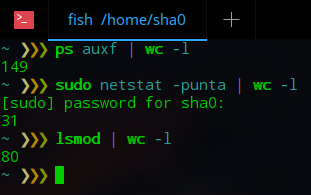
The CPU usage is similar, but Deepin by default is using more processes, more network connections and more drivers than UbuntuDDE.


  4.  Workspaces

UbuntuDDE allows up to 7 workspaces meanwhile Deepin right now only allows 4.
Is not only more workspaces for UbuntuDDE, it's also the more eficient way to display them.


    5.  Software Versions

Deepin is based on Debian so the program versions on store and apt are old but stable, and can have problems with the old libraries installed on the system when compiling new software.

We can see below that Ubuntu's compiler version is quite new, the 9.3.0 which is quite well, but Deepin's version is 6.3.0.


Regarding the kernels, UbuntuDDE has the 5.4.0.21 and Deepin the 4.15.0-30, the libc in both systems is updated.


    6.  The store

Deepin's store is fast and polished and contain the main software, but and the UbuntuDDE


   Conclussions

Deepin is the most used of both and it's the original one, but many users are trying the UbuntuDDE (which is beta for now) because the need of using recent versions, also the 4 workspaces on Deepin is another limitation for some Linux users. Probably Deepin v20 will overcome the limitations but the main decision is between Debian as base system or ubuntu, and for more users the trend in workstations is ubuntu.


   Gallery


Read more
  1. Hacking Websites
  2. Hacker Code
  3. Pentest Dns Server
  4. Pentest Iso
  5. Hacking 3Ds
  6. Pentest Network
  7. Hacking Google
  8. Pentest Jobs
  9. Hacking Network
  10. Pentest Checklist
  11. Pentest Hardware
  12. Pentest Practice Sites
  13. Pentest Partners
  14. Pentest News
  15. Hacking Jailbreak
  16. Hacking Simulator

quinta-feira, 4 de junho de 2020

NcN 2015 CTF - theAnswer Writeup


1. Overview

Is an elf32 static and stripped binary, but the good news is that it was compiled with gcc and it will not have shitty runtimes and libs to fingerprint, just the libc ... and libprhrhead
This binary is writed by Ricardo J Rodrigez

When it's executed, it seems that is computing the flag:


But this process never ends .... let's see what strace say:


There is a thread deadlock, maybe the start point can be looking in IDA the xrefs of 0x403a85
Maybe we can think about an encrypted flag that is not decrypting because of the lock.

This can be solved in two ways:

  • static: understanding the cryptosystem and programming our own decryptor
  • dynamic: fixing the the binary and running it (hard: antidebug, futex, rands ...)


At first sight I thought that dynamic approach were quicker, but it turned more complex than the static approach.


2. Static approach

Crawling the xrefs to the futex, it is possible to locate the main:


With libc/libpthread function fingerprinting or a bit of manual work, we have the symbols, here is the main, where 255 threads are created and joined, when the threads end, the xor key is calculated and it calls the print_flag:


The code of the thread is passed to the libc_pthread_create, IDA recognize this area as data but can be selected as code and function.

This is the thread code decompiled, where we can observe two infinite loops for ptrace detection and preload (although is static) this antidebug/antihook are easy to detect at this point.


we have to observe the important thing, is the key random?? well, with the same seed the random sequence will be the same, then the key is "hidden" in the predictability of the random.

If the threads are not executed on the creation order, the key will be wrong because is xored with the th_id which is the identify of current thread.

The print_key function, do the xor between the key and the flag_cyphertext byte by byte.


And here we have the seed and the first bytes of the cypher-text:


With radare we can convert this to a c variable quickly:


And here is the flag cyphertext:


And with some radare magics, we have the c initialized array:


radare, is full featured :)

With a bit of rand() calibration here is the solution ...


The code:
https://github.com/NocONName/CTF_NcN2k15/blob/master/theAnswer/solution.c


3. The Dynamic Approach

First we have to patch the anti-debugs, on beginning of the thread there is two evident anti-debugs (well anti preload hook and anti ptrace debugging) the infinite loop also makes the anti-debug more evident:


There are also a third anti-debug, a bit more silent, if detects a debugger trough the first available descriptor, and here comes the fucking part, don't crash the execution, the execution continues but the seed is modified a bit, then the decryption key will not be ok.


Ok, the seed is incremented by one, this could be a normal program feature, but this is only triggered if the fileno(open("/","r")) > 3 this is a well known anti-debug, that also can be seen from a traced execution.

Ok, just one byte patch,  seed+=1  to  seed+=0,   (add eax, 1   to add eax, 0)

before:


after:


To patch the two infinite loops, just nop the two bytes of each jmp $-0


Ok, but repairing this binary is harder than building a decryptor, we need to fix more things:

  •  The sleep(randInt(1,3)) of the beginning of the thread to execute the threads in the correct order
  •  Modify the pthread_cond_wait to avoid the futex()
  • We also need to calibrate de rand() to get the key (just patch the sleep and add other rand() before the pthread_create loop
Adding the extra rand() can be done with a patch because from gdb is not possible to make a call rand() in this binary.

With this modifications, the binary will print the key by itself. 

More info

iCloudBrutter - AppleID Bruteforce


iCloudBrutter is a simple python (3.x) script to perform basic bruteforce attack againts AppleID.

Usage of iCloudBrutter for attacking targets without prior mutual consent is illegal. iCloudBrutter developer not responsible to any damage caused by iCloudBrutter.

Installation
$ git clone https://github.com/m4ll0k/iCloudBrutter.git
$ cd iCloudBrutter
$ pip3 install requests,urllib3,socks
$ python3 icloud.py


Read more


  1. Hacker Software
  2. Hacking Names
  3. Pentest +
  4. Hacker Forum
  5. Hackerone
  6. Hacking Websites
  7. Hacker Code
  8. Hacking Apps
  9. Pentest Standard
  10. Hacker Prank
  11. Pentest Ftp
  12. Pentest Tutorial
  13. How To Pentest A Website With Kali
  14. Pentest Meaning
  15. Pentest Windows
  16. Pentest Software
  17. Basic Pentest 1 Walkthrough
  18. Hacker Videos

Practical Dictionary Attack On IPsec IKE

We found out that in contrast to public knowledge, the Pre-Shared Key (PSK) authentication method in main mode of IKEv1 is susceptible to offline dictionary attacks. This requires only a single active Man-in-the-Middle attack. Thus, if low entropy passwords are used as PSKs, this can easily be broken.

This week at the USENIX Security conference, Dennis Felsch will present our research paper on IPsec attacksThe Dangers of Key Reuse: Practical Attacks on IPsec IKE. [alternative link to the paper]

In his blog post, Dennis showed how to attack the public key encryption based authentication methods of IKEv1 (PKE & RPKE) and how to use this attack against IKEv2 signature based authentication method. In this blog post, I will focus on another interesting finding regarding IKEv1 and the Pre-Shared Key authentication.

IPsec and Internet Key Exchange (IKE)

IPsec enables cryptographic protection of IP packets. It is commonly used to build VPNs (Virtual Private Networks). For key establishment, the IKE protocol is used. IKE exists in two versions, each with different modes, different phases, several authentication methods, and configuration options. Therefore, IKE is one of the most complex cryptographic protocols in use.

In version 1 of IKE (IKEv1), four authentication methods are available for Phase 1, in which initial authenticated keying material is established: Two public key encryption based methods, one signature based method, and a PSK (Pre-Shared Key) based method.

The relationship between IKEv1 Phase 1, Phase 2, and IPsec ESP. Multiple simultaneous Phase 2 connections can be established from a single Phase 1 connection. Grey parts are encrypted, either with IKE derived keys (light grey) or with IPsec keys (dark grey). The numbers at the curly brackets denote the number of messages to be exchanged in the protocol.

Pre-Shared Key authentication

As shown above, Pre-Shared Key authentication is one of three authentication methods in IKEv1. The authentication is based on the knowledge of a shared secret string. In reality, this is probably some sort of password.

The IKEv1 handshake for PSK authentication looks like the following (simplified version):


In the first two messages, the session identifier (inside HDR) and the cryptographic algorithms (proposals) are selected by initiator and responder. 

In messages 3 and 4, they exchange ephemeral Diffie-Hellman shares and nonces. After that, they compute a key k by using their shared secret (PSK) in a PRF function (e.g. HMAC-SHA1) and the previously exchanged nonces. This key is used to derive additional keys (ka, kd, ke). The key kd is used to compute MACI over the session identifier and the shared diffie-hellman secret gxy. Finally, the key ke is used to encrypt IDI (e.g. IPv4 address of the peer) and MACI

Weaknesses of PSK authentication

It is well known that the aggressive mode of authentication in combination with PSK is insecure and vulnerable against off-line dictionary attacks, by simply eavesedropping the packets. For example, in strongSwan it is necessary to set the following configuration flag in order to use it:
charon.i_dont_care_about_security_and_use_aggressive_mode_psk=yes

For the main mode, we found a similar attack when doing some minor additional work. For that, the attacker needs to waits until a peer A (initiator) tries to connect to another peer B (responder). Then, the attacker acts as a man-in-the middle and behaves like the peer B would, but does not forward the packets to B.

From the picture above it should be clear that an attacker who acts as B can compute (gxy) and receives the necessary public values session ID, nI, nR. However, the attacker does not know the PSK. In order to mount a dictionary attack against this value, he uses the nonces, and computes a candidate for for every entry in the dictionary. It is necessary to make a key derivation for every k with the values of the session identifiers and shared Diffie-Hellmann secret the possible keys ka, kd and ke. Then, the attacker uses ke in order to decrypt the encrypted part of message 5. Due to IDI often being an IP address plus some additional data of the initiator, the attacker can easily determine if the correct PSK has been found.

Who is affected?

This weakness exists in the IKEv1 standard (RFC 2409). Every software or hardware that is compliant to this standard is affected. Therefore, we encourage all vendors, companies, and developers to at least ensure that high-entropy Pre-Shared Keys are used in IKEv1 configurations.

In order to verify the attack, we tested the attack against strongSWAN 5.5.1.

Proof-of-Concept

We have implemented a PoC that runs a dictionary attack against a network capture (pcapng) of a IKEv1 main mode session. As input, it also requires the Diffie-Hellmann secret as described above. You can find the source code at github. We only tested the attack against strongSWAN 5.5.1. If you want to use the PoC against another implementation or session, you have to adjust the idHex value in main.py.

Responsible Disclosure

We reported our findings to the international CERT at July 6th, 2018. We were informed that they contacted over 250 parties about the weakness. The CVE ID for it is CVE-2018-5389 [cert entry].

Credits

On August 10th, 2018, we learned that this attack against IKEv1 main mode with PSKs was previously described by David McGrew in his blog post Great Cipher, But Where Did You Get That Key?. We would like to point out that neither we nor the USENIX reviewers nor the CERT were obviously aware of this.
On August 14th 2018, Graham Bartlett (Cisco) email us that he presented the weakness of PSK in IKEv2 in several public presentations and in his book.
On August 15th 2018, we were informed by Tamir Zegman that John Pliam described the attack on his web page in 1999.

FAQs

  • Do you have a name, logo, any merchandising for the attack?
    No.
  • Have I been attacked?
    We mentioned above that such an attack would require an active man-in-the-middle attack. In the logs this could look like a failed connection attempt or a session timed out. But this is a rather weak indication and no evidence for an attack. 
  • What should I do?
    If you do not have the option to switch to authentication with digital signatures, choose a Pre-Shared Key that resists dictionary attacks. If you want to achieve e.g. 128 bits of security, configure a PSK with at least 19 random ASCII characters. And do not use something that can be found in public databases.
  • Am I safe if I use PSKs with IKEv2?
    No, interestingly the standard also mentions that IKEv2 does not prevent against off-line dictionary attacks.
  • Where can I learn more?
    You can read the paper[alternative link to the paper]
  • What else does the paper contain?
    The paper contains a lot more details than this blogpost. It explains all authentication methods of IKEv1 and it gives message flow diagrams of the protocol. There, we describe a variant of the attack that uses the Bleichenbacher oracles to forge signatures to target IKEv2. 

Related links


DOWNLOAD XSSTRIKE – ADVANCED XSS EXPLOITATION SUITE

XSSTRIKE – ADVANCED XSS EXPLOITATION SUITE

XSStrike is really advanced XSS exploitation and detection suite, which contains a very powerful XSS fuzzer and provides no false positive results using fuzzy matching. XSStrike is the first XSS scanner that generates its own payloads. Download xsstrike and test it out.
It also has built in an artificial intelligent enough to detect and break out of various contexts.

FEATURES:

  • Powerful Fuzzing Engine
  • Context Breaking Intelligence
  • AI Payload Generation
  • GET & POST Methods Support
  • Cookie Support
  • WAF Fingerprinting
  • Handcrafted Payloads to Filter and WAF Evasion
  • Hidden Parameter Discovery
  • Accurate Results

DOWNLOAD XSSTRIKE – ADVANCED XSS EXPLOITATION SUITE

Click here to download xsstrike.

Related links


quarta-feira, 3 de junho de 2020

BurpSuite Introduction & Installation


What is BurpSuite?
Burp Suite is a Java based Web Penetration Testing framework. It has become an industry standard suite of tools used by information security professionals. Burp Suite helps you identify vulnerabilities and verify attack vectors that are affecting web applications. Because of its popularity and breadth as well as depth of features, we have created this useful page as a collection of Burp Suite knowledge and information.

In its simplest form, Burp Suite can be classified as an Interception Proxy. While browsing their target application, a penetration tester can configure their internet browser to route traffic through the Burp Suite proxy server. Burp Suite then acts as a (sort of) Man In The Middle by capturing and analyzing each request to and from the target web application so that they can be analyzed.


Everyone has their favorite security tools, but when it comes to mobile and web applications I've always found myself looking BurpSuite . It always seems to have everything I need and for folks just getting started with web application testing it can be a challenge putting all of the pieces together. I'm just going to go through the installation to paint a good picture of how to get it up quickly.

BurpSuite is freely available with everything you need to get started and when you're ready to cut the leash, the professional version has some handy tools that can make the whole process a little bit easier. I'll also go through how to install FoxyProxy which makes it much easier to change your proxy setup, but we'll get into that a little later.

Requirements and assumptions:

Mozilla Firefox 3.1 or Later Knowledge of Firefox Add-ons and installation The Java Runtime Environment installed

Download BurpSuite from http://portswigger.net/burp/download.htmland make a note of where you save it.

on for Firefox from   https://addons.mozilla.org/en-US/firefox/addon/foxyproxy-standard/


If this is your first time running the JAR file, it may take a minute or two to load, so be patient and wait.


Video for setup and installation.


You need to install compatible version of java , So that you can run BurpSuite.
More info
  1. Pentest Open Source
  2. Hacking Groups
  3. Hacking Lab
  4. Pentest Hardware
  5. Pentest Windows
  6. Pentest Blog
  7. Pentesting And Ethical Hacking
  8. Hacking Google
  9. Pentest Uk
  10. Hacking Lab
  11. Pentest Website
  12. Pentest Open Source
  13. Pentester Academy
  14. Pentest Jobs
  15. Pentesting And Ethical Hacking
  16. Pentest As A Service
  17. Pentest Plus
  18. Pentest Guide
  19. Pentest Website

OWASP Web 2.0 Project Update

Some of you likely recall the talk back in 2016 or so of updating the OWASP Foundation website to not appear so much like a...well, a wiki.  That talk was carried forward into 2017 and 2018 and, with each year, the proposal got pushed ahead as there were other, deeper projects to tackle.  With the arrival of 2019 and a firm project plan under the guidance of Mike McCamon, Executive Director, we are finally moving toward a functioning, modern website that will be a whole lot less...wiki-like.  The journey has been circuitous and, while we are not anywhere near complete, we have a set plan in place to bring it to fruition within the calendar year (second quarter of the year, actually).

TLDR: How Can You Help? 

There are certainly ways in which you can get involved now.  For instance, we are looking for a clean way to get wiki pages into GitHub markdown format for archival.  I have done some work here but there are parsing issues with some of the tools.  Do you know a good tool or have you done similar work?  Also, are you or do you know a good designer, someone familiar with GitHub pages that can provide some useful help and feedback along the way?  A Jekyll expert to help code a theme with a handful of templates would be a great addition.  In addition, we could use website server admins who could help with assigning redirects to maintain search integrity.  Finally, there will be a great many pages to move that we will also eventually need community involvement in.  

So, What Have We Done? 

Thus far we have researched various ideas for standing up a new site, including modifying the current wiki, spinning up our own web server, contracting a third party to host and build a new site, and also using existing infrastructure with our own content to launch a new face for OWASP.  Our discussions led us to a familiar place, one that nearly every developer in the OWASP space is familiar with: GitHub.   

In our conversations with GitHub, it became readily apparent that using the platform would be a win for the Foundation as well as GitHub.  Nearly everyone who runs a project at OWASP (documentation or otherwise) uses GitHub.  Because our target audience is also mostly developers we know that they are also very comfortable with the platform.  And while GitHub has a number of high profile companies using their GitHub Pages, the use of the platform as the basis for the entire website of the number one non-profit foundation in the application security sector is a big draw.

We have run with that GitHub Pages idea and have spent internal manpower on a proof of concept.  This proof of concept is less about the UX of the site than the functionality, the ability to utilize the authentication systems, and the ability to utilize automation to push out changes quickly.

Where Are We Now?

We are doing the final stages of website architecture. We are also planning what needs to be in the site, how the pieces will integrate with current projects and chapters, and how we might utilize the community to integrate the pieces so that we have a visually and functionally cohesive website that spans across multiple repositories.

What Is Next?

We will soon be looking for a modern website design that is responsive and clean.  We will begin using the knowledge gained from our proof of concept to build out the internals of the website and then we will start implementing the highest traffic pages and administrative areas into the new platform.  Once we have the big-ticket items moved we will start looking at what is left and moving over those pieces.  The eventual goal would be to have a new, modern website for the future of OWASP while keeping the wiki as an archive of really useful information.


We hope you are as excited as we are about the future of the OWASP Foundation website and will join us as we move toward a modern web presence.  If you have any questions or would like to volunteer your time, experience or knowledge, please contact me at harold.blankenship@owasp.com

More info
  1. Hacker Computer
  2. Pentest Web Application
  3. Pentest Dns Server
  4. Pentest Wiki
  5. Pentest Cyber Security
  6. Hacking Ethics
  7. Hackerone
  8. Hacking Tools
  9. Pentesting And Ethical Hacking
  10. Hacking Google
  11. Pentest Basics
  12. Pentest Reporting Tool
  13. Hacking 3Ds
  14. Pentest Jobs
  15. Pentest Lab Setup
  16. Pentest Reporting Tool